As an Amazon Associate, we earn from qualifying purchases. Some links on this site are affiliate links at no extra cost to you. Our recommendations are based on thorough research and editorial judgment.
What Is The Difference Between Cassette And Freecoaster Hubs?

So, what’s the deal with cassette and freecoaster hubs? Well, cassette hubs give us quick pedal engagement, perfect for speed, while freecoasters let us coast backward for cool tricks! Cassette ones are cheaper and simpler to maintain, but freecoasters offer greater flexibility for freestylers. If you’re into tricks, freecoasters might be your jam, but for durability and faster riding, cassette hubs steal the show! Stick with us, and we’ll break down more details soon!
Key Takeaways
- Cassette hubs provide constant pedal engagement, ideal for quick power, while freecoaster hubs allow backward coasting for performing tricks like fakies.
- Freecoaster hubs have a complex clutch system, making them pricier and maintenance-intensive compared to the simpler, budget-friendly cassette hubs.
- Cassette hubs are preferred by racers and trail riders due to their durability and quick acceleration, while freecoasters cater to freestyle and flatland riders.
- Freecoaster hubs can feel heavier and slower than cassette hubs, affecting the riding style and preferences of the user.
- Future innovations in hub technology focus on lightweight materials and IoT connectivity to enhance performance and riding experience for both hub types.
Mechanical Design Differences
You may be interested


Hub Structure
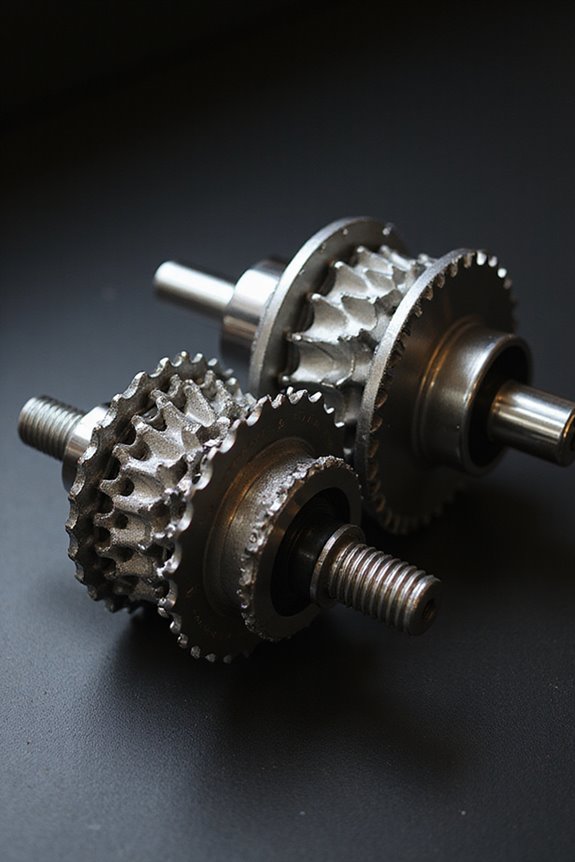
Freecoaster hubs are complex. They feature a clutch system with intricate internal parts that allow for pedaling disengagement. This adds weight and demands precise assembly.
On the flip side, cassette hubs have a simpler design specification. They rely on a driver mechanism that’s easy to maintain and less prone to issues.
Engagement Mechanics
While cassette hubs engage immediately when pedaled, freecoasters need some slack before they can get moving again. This makes their design more fascinating but also a bit fussier.
In a nutshell, cassette hubs are straightforward, whereas freecoasters offer a unique, albeit more complicated, experience! Additionally, lightweight aluminum construction contributes to the overall performance of BMX bikes, enhancing agility and control during rides.
Recommended Products

L80 is a fully park, street or dirt worthy freestyle BMX bike, Hi-Ten steel 9 inch rise handlebar that will make you stand out at the bike park, Suggested rider height is 5’6” - 6'0".


High-performance 20-inch rear wheel featuring a durable 2014-T6 aluminum rim and 36H spoke count for enhanced strength and stability during aggressive riding.
Riding Experience and Functionality
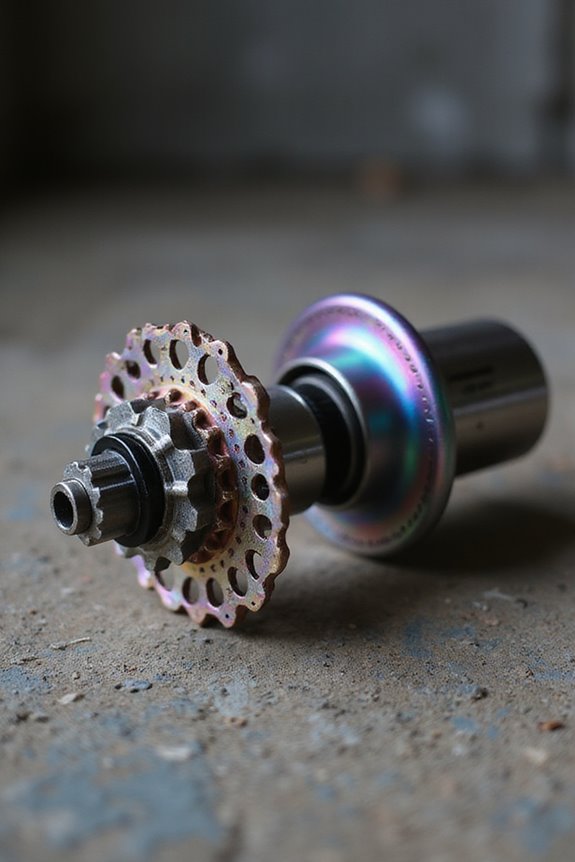
As we plunge into the riding experience of cassette and freecoaster hubs, it’s clear there are some fun differences!
Cassette Hubs
These guys keep our pedals engaged all the time, so we get quick power when we need it. They’re great for fast riding and tricks needing stable pedals, but they limit our backward coasting. This means we might face some adjustment challenges switching over! Additionally, cassette hubs are typically lighter than freewheel hubs, which can enhance overall bike performance.
Freecoaster Hubs
On the flip side, freecoasters let us coast backward without pedaling, which feels super smooth for tricks like fakies. That freedom can enhance our riding comfort, especially for technical moves, but they can be heavier and a tad sluggish sometimes.
In the end, each hub offers a unique riding experience that can totally shape our style!
Intended Rider Profiles and Usage
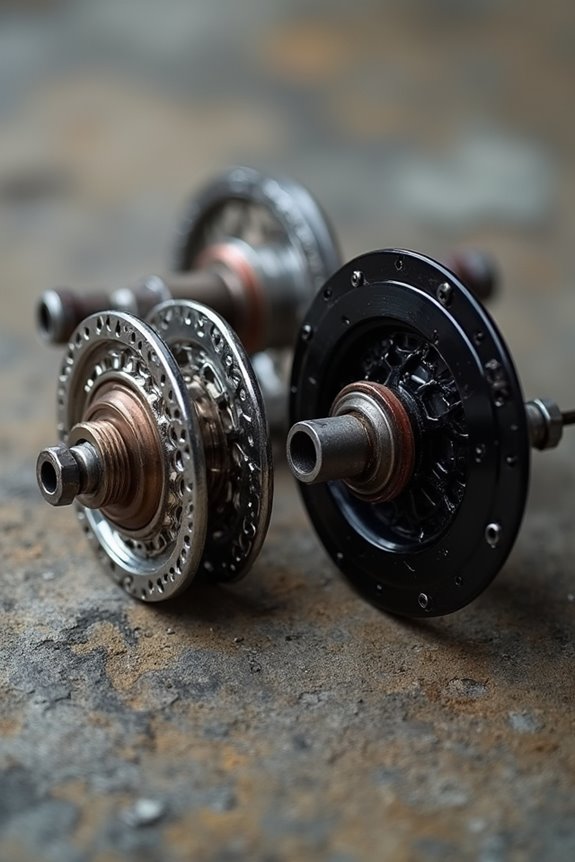
Choosing between cassette and freecoaster hubs can feel like picking your favorite ice cream flavor—each has its own appeal! When we think about rider profiles, cassette hubs are great for everyone, from beginners to advanced riders. They’re easy to use and perfect for quick responses in street or trail riding. On the other hand, freecoaster hubs attract intermediate to advanced riders who love those smooth fakie tricks and coasting.
In terms of usage patterns, freestyle and flatland riders often favor freecoasters for their trick-friendly features. Meanwhile, trail and dirt jumpers usually lean towards cassette hubs for their durability and power. So, your riding style can really help in picking the hub that’s just right for you! Additionally, understanding brake systems is essential for optimizing performance based on your chosen hub type.
Recommended Products
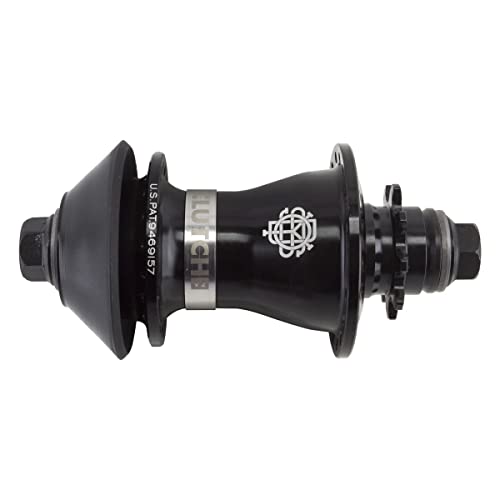
Odyssey Clutch V2 Freecoaster Hub RHD 9T Black

【Exquisite workmanship】This skateboard hardware adopts aluminum alloy casting and die-casting process, medium carbon steel hardening treatment, and metal baking paint, which enables the scooter to withstand greater weight and pressure.
Others step aside, this is now the standard in base level skateboard bearings that are a step above the rest.
Cost and Maintenance
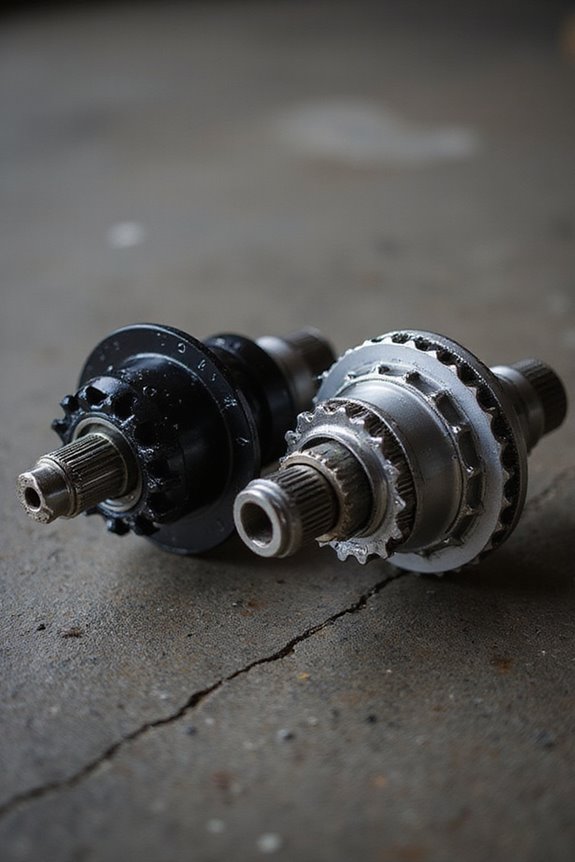
Understanding how much a hub costs and how to take care of it can make a big difference in our riding experience! Let’s explore our cost analysis. Cassette hubs are often more budget-friendly, starting around $60. In contrast, we might see freecoaster hubs beginning at $150 due to their complex inner workings.
When it comes to maintenance challenges, cassette hubs are simpler and need less upkeep. Freecoasters, however, require more frequent attention. We’ll need to learn how to adjust slack washers or service their intricate parts, which can add costs. Keeping our freecoaster running smoothly may mean more trips to the bike shop. Regular maintenance checks are recommended for longevity, so whether we’re thrifty or ready to splurge, being informed helps us choose the best hub for our rides!
Recommended Products

High-performance 20-inch rear wheel featuring a durable 36H 2014-T6 aluminum rim for lightweight strength and longevity.

LCD Display: The LCD meter with a color screen can display the real-time speed, maximum speed, average speed, total mileage, single mileage, battery power, assist gear/speed grading, cruise control, and error code, allowing you to grasp the usage status of the product

Odyssey Clutch V2 Freecoaster Hub LHD 9T Black
Engagement and Pedaling Dynamics
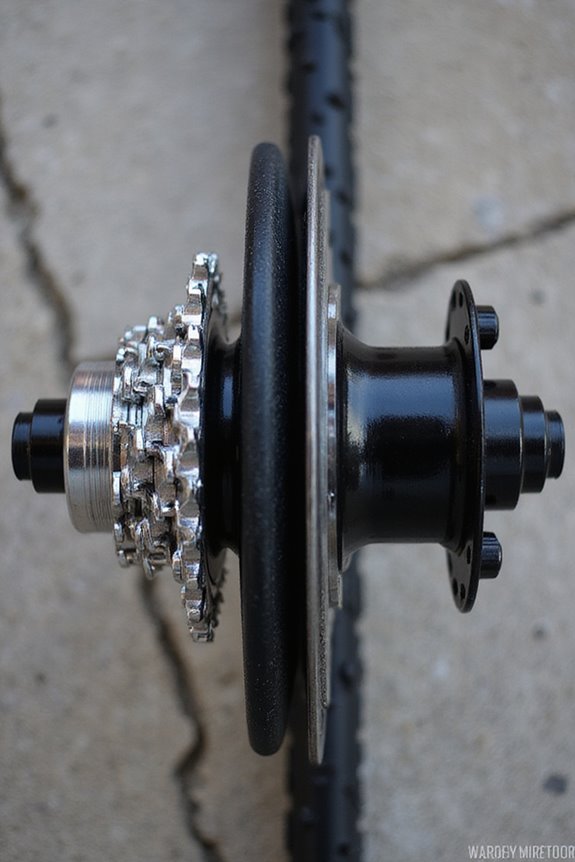
When we’re hitting the streets or parks on our bikes, the type of hub we choose can really affect our ride! The engagement timing is key here. Cassette hubs engage instantly—there’s no slack—allowing for smooth pedaling efficiency right from the start. This means quick acceleration when we power up!
On the flip side, freecoaster hubs have that little bit of slack before they engage. This delay lets us ride backward without pedaling, which is super handy for tricks like fakies! While this gives us freedom and control, it can slow down our acceleration a touch. Additionally, choosing the right hub can significantly impact the overall performance of your BMX bike, enhancing your riding experience.
Popularity Trends and Emerging Alternatives
As we plunge into the popularity trends of hubs, it’s clear that riders have distinct preferences based on their style. Cassette hubs remain the go-to for racers who crave speed and quick engagement. On the flip side, street riders lean toward freecoasters for those smooth fakie tricks!
We’re seeing some exciting developments too! Hybrid hubs are gaining traction, allowing us to switch between styles without swapping parts. Plus, planetary hubs are rising in popularity for their smooth engagement and backward coasting—no more slack issues! This hub evolution reflects market dynamics where riders want versatility and performance. Additionally, the rise of lightweight frames in BMX design has led to improved handling and performance across various riding styles.
With adjustable slack and lightweight materials, the future looks bright for all us BMX enthusiasts! Let’s ride into this new era together!
Internal Mechanisms of Cassette Hubs
Cassette hubs are packed with clever mechanisms that make them work efficiently! At the heart of these hubs is the freehub body where the cassette sprockets mount. Inside, we find pawls—those little metal pieces that engage with a ratchet system. When we pedal, these pawls click into place, transferring our energy forward. When we coast, they pull back, allowing smooth spinning.
Now, let’s talk about bearings! These come in different types—like cartridge and loose ball—helping to minimize friction. Proper bearing placement is key for smooth rides. And don’t forget the hub shell. It provides strength and houses everything neatly! So, when we ride, we can trust our cassette hubs to spin flawlessly and deliver the power we need!
Internal Mechanisms of Freecoaster Hubs
Freecoaster hubs bring a unique twist to the biking experience! At the heart of these hubs lies the clutch engagement system. This little component decides whether we’re pedaling forward or coasting back. When engaged, the clutch locks onto the driver, so our pedaling powers the wheel. But when it’s disengaged, that wheel can spin backward without any pesky resistance!
Resistance mechanisms play an essential role too. They help control how the clutch moves, with some hubs even allowing us to adjust slack for that perfect feel. Plus, certain models feature advanced planetary gear systems that make switching between driving modes smooth and breezy! It’s these intricate details that make freecoasters truly special, giving us a fun, responsive ride!
Performance in Tricks and Maneuvers
When we’re out at the skatepark or cruising the streets, the type of hub we ride plays a big role in how we perform tricks! Freecoaster hubs let us ride backward without pedaling, giving us smooth fakie control and better trick precision. This can really boost our rider confidence, allowing for more consistent fakie tricks.
On the flip side, cassette hubs provide solid pedal engagement, making tricks that need pedal pressure, like tail taps, easier. They excel in speed dynamics thanks to quick engagement, which is key for rapid maneuvers.
Maintenance Requirements Comparison
While both types of hubs are awesome in their own ways, they have very different maintenance needs.
Cassette Hubs
These are simpler! With fewer internal parts, they usually have longer intervals between servicing. Just some occasional cleaning and lubrication is all that’s needed for good hub longevity.
Freecoaster Hubs
These require more attention due to their complex clutch mechanism. More frequent bearing inspections and adjustments are necessary, as the clutch can put uneven stress on the bearings. We’ve got to stay on top of maintenance techniques like adjusting clutch tension and managing slack to keep things running smoothly.
In essence, if we embrace the extra care needed for freecoasters, they can be a blast! But, keep in mind, they do demand that bit more love.
Rider Feedback and Preferences
Rider feedback and preferences play a huge role in choosing between cassette and freecoaster hubs! When we check out rider testimonials, it’s clear that style and trick capability matter. Freecoaster hubs shine for tricks like fakie riding, making them a hit among street riders. However, when quick acceleration and reliable engagement are on the table, cassette hubs are the go-to!
In hub comparisons, we often hear that freecoaster riders love the ability to coast backwards, while cassette fans boast about unstoppable engagement. Meanwhile, durability stands out—cassettes generally win for reliability. Ultimately, our choice reflects our style, whether we’re racing or just enjoying a chill street ride! It’s all about what fits our vibe best!
Future Developments in Hub Technology
As we plunge into the future of hub technology, it’s exciting to see how innovation is shaping our rides! Imagine hubs made from sustainable materials, like aerospace-grade aluminum and carbon fiber, making them lighter and tougher. These materials not only boost performance but also help reduce waste over time.
Smart technologies are also on the rise! Hubs now come with IoT connectivity, allowing us to monitor performance in real-time. Features like torque sensors help optimize power delivery, ensuring we can ride smoothly and safely.
We’re also seeing new bearing tech that decreases friction, making our rides feel effortless. With customizable options, our hubs can finally match our unique riding styles. The future is bright, and we can’t wait to see what’s next!
Frequently Asked Questions
Recommended Products
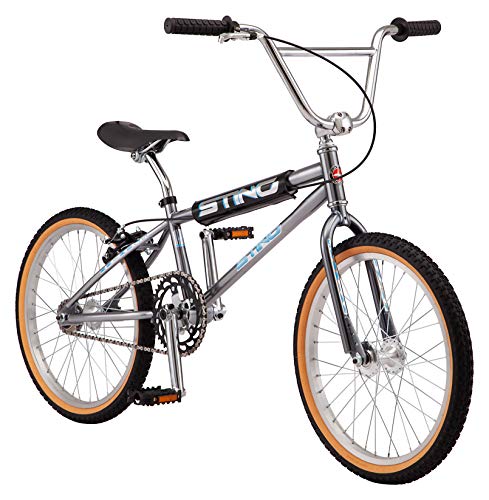
The ultimate racing machine rides again with a Schwinn Hiten steel BMX frame based on the iconic 1989 design. Fits riders 4’8” to 5’4” in height


Precision CNC CroMo construction
Can I Switch Between Cassette and Freecoaster Hubs Easily?
Switching between cassette and freecoaster hubs isn’t easy, but with patience and maintenance tips, we can make it work. Just remember, compatibility issues may arise, and a little mechanical knowledge goes a long way.
What Type of Bike Can Use a Freecoaster Hub?
Freecoaster hubs shine on BMX bikes, enhancing our riding techniques with backward rolling advantages. They’re perfect for those freestyle moments, letting us execute tricks like manuals and fakies seamlessly, while meeting our performance needs beautifully.
How Does Weather Affect Hub Performance?
Weather conditions greatly impact hub performance, so we must prioritize regular hub maintenance. Rain or dust can lead to increased wear, while temperature changes affect lubricants. Keeping our hubs well-maintained guarantees smoother rides and longevity.
Are There Weight Differences Between Cassette and Freecoaster Hubs?
Yes, there’s a noticeable weight difference between cassette and freecoaster hubs. Typically, cassette hubs use lighter materials, making them easier to maneuver, while freecoasters often weigh more due to their complex internal mechanisms. Let’s choose wisely!
Can I Install a Freecoaster Hub on a Racing Bike?
Let’s not beat around the bush—installing a freecoaster hub on a racing bike isn’t feasible. Racing bike features require specific hub compatibility, making this combination impractical for smooth, efficient performance.


