As an Amazon Associate, we earn from qualifying purchases. Some links on this site are affiliate links at no extra cost to you. Our recommendations are based on thorough research and editorial judgment.


How To Choose A BMX Sprocket Size For Manuals?

Choosing a BMX sprocket size for manuals can really boost your skills! For better balance and control, we should stick to smaller sprockets, around 25-28 teeth. This helps us perform tricks more easily. Plus, lower gear ratios are great for quick acceleration! Don’t forget to check compatibility with our bike parts and consider the material for durability. If we keep diving deeper, we’ll find even more tips to help us master those manuals!
Key Takeaways
- Choose a smaller sprocket (25T–28T) for better balance and control during manuals.
- Consider lower gear ratios (1.8 to 2.0) for quick acceleration and improved torque.
- Ensure proper chain tension and alignment to maintain stability while performing tricks.
- Opt for lightweight materials to reduce rotational mass and enhance maneuverability.
- Verify compatibility with your bike’s spindle size and mounting style for optimal performance.
Understanding Sprocket Size and Its Impact on Manuals
You may be interested



When we’re out there riding our BMX bikes, the size of our sprocket can really change how we handle manuals! A smaller sprocket, like those in the 25T–28T range, helps us avoid obstacles better, giving us more balance and control. It allows for cleaner manuals, too! With increased sprocket thickness, we also benefit from durability considerations; these thicker sprockets can take a beating during those harsh landings.
Plus, low-profile designs keep us from hitting rails, making precision easier. Don’t forget gear ratios too! A lower gear ratio means less pedal force is needed, helping us maintain steady balance while doing those fun tricks. Choosing the right sprocket is key for mastering manuals! Additionally, considering material durability in your sprocket choice can enhance performance during challenging rides.
Recommended Products

Belt Drives CS-25A - Compensator Sprocket, 25T


Stiff and lightweight chainring delivers smooth pedaling over bumpy terrain
Selecting the Right Sprocket Size Based on Riding Style
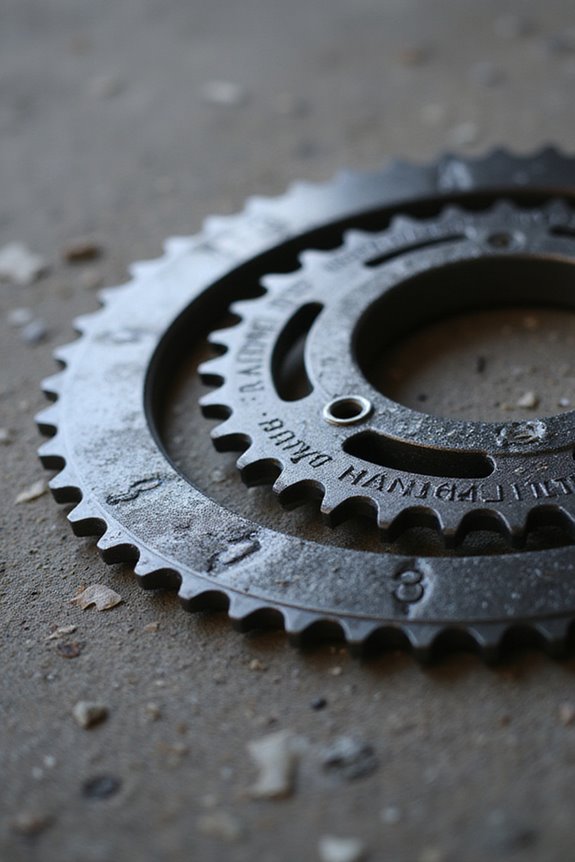
Choosing the right sprocket size can completely change how we ride, especially when it comes to different styles. For street and park riding, we often lean toward sprockets with 25-28 teeth. If we’re hitting dirt or trails, though, going larger (30-36 teeth) really helps us keep our speed on uneven terrain. Racers? They typically opt for bigger sprockets (36-46 teeth) to hit those high speeds on smooth tracks!
Don’t forget, many sprocket brands offer custom designs that can enhance our performance based on style. Remember, smaller sprockets boost our acceleration, while larger ones bring top speed. It’s all about finding that sweet spot for our individual riding style! Additionally, premium-grade chromoly steel is often recommended for durability in sprocket construction, ensuring reliable performance on various terrains. Let’s enjoy the ride and dial in our sprocket choices!
Recommended Products


12 speed cassette:MTB cassette, 12s mountain bike cassette freewheel for HG freehub .

The Million Dollar Sprocket version 2
Importance of Gear Ratios in Manual Performance

Gear ratios play a key role in how we pull off those awesome manuals on our BMX bikes! Understanding gear ratio dynamics lets us tweak our sprocket sizes for better manual performance optimization.
A lower gear ratio means quicker acceleration and better torque. This helps us pop the front wheel up and maintain balance! On the flip side, a higher ratio can boost our speed but may make precision adjustments tricky during manuals.
Finding that sweet spot is essential. Ratios around 1.8 to 2.0 generally work well for most of us when doing tricks. Remember, it’s all about balancing speed with control. Additionally, experimenting with BMX peg compatibility can also enhance overall bike performance, allowing for better stability during tricks. Let’s experiment with different setups and discover what feels right for our riding style! Happy riding!
Compatibility Factors to Consider When Choosing a Sprocket

Understanding compatibility factors is super important before we immerse ourselves in picking a BMX sprocket! First, let’s consider the spindle size. We need to verify the sprocket matches our crank spindle, which commonly comes in 19mm, 22mm, or 24mm sizes. And don’t forget about sprocket materials; they vary by brand and can affect durability.
Next up is the mounting style. Are we using bolt-on or spline drive systems? Both need to fit our specific crank design. Finally, remember that the tooth count impacts the chain length and how our ride feels. Additionally, using higher quality materials like alloy 6061 can enhance the sprocket’s durability and performance.
Checking these factors can help us avoid any compatibility headaches. Let’s find the perfect sprocket and roll out in style!
Recommended Products

Full 4130 Chromoly Forks & Full 4131 Chromoly Frame

Full 4130 Chromoly Forks & Full 4131 Chromoly Frame

Full chromoly frame. 25t BMX sprocket and 9 tooth driver.
Additional Mechanical Considerations for Enhanced Manual Control
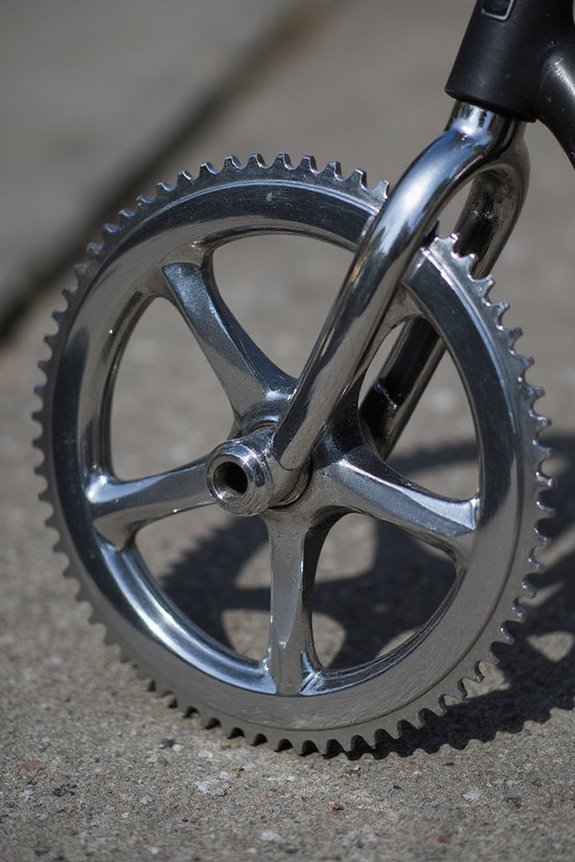
Now that we’ve sorted out compatibility, let’s look at some of the mechanical aspects that can boost our manual control on the BMX. Choosing the right sprocket materials is key. Lighter options help reduce rotational mass, making balance easier!
Next, we need to take into account chain alignment and tension. A larger sprocket might require a longer chain, and if it’s too tight or loose, we risk losing control during manuals. Always make certain our chain runs straight to guarantee smooth power delivery.
Finally, let’s think about sprocket size. Smaller ones give us better torque for quick balance adjustments, while larger ones focus on speed. Finding that perfect balance is what makes our rides fun and smooth! Additionally, selecting a sprocket made from high-strength materials can enhance durability and performance during tricks.
The Influence of BMX Stem and Frame Geometry on Sprocket Choice
When we think about choosing the right sprocket size, we can’t ignore how BMX stem and frame geometry plays a role! The stem angle and rise can drastically affect our balance and comfort during manuals. Higher rise stems give us stability, so we might want slightly larger sprockets for better control.
Conversely, lower rise stems lead to a more aggressive riding position. This may call for smaller sprockets, as we need quick acceleration!
Let’s not forget the frame stiffness and geometry! Longer top tubes paired with long stems provide stability, often requiring larger sprockets for smoother progress. Additionally, brake compatibility is crucial as it influences control and safety during tricks. Balancing our stem and frame setup is key, and adjusting our sprocket size can help us nail those manuals with style!
Tips for Testing and Adjusting Sprocket Size for Optimal Manuals
In our quest for the perfect manuals, getting the sprocket size just right can make a world of difference! Here are some helpful tips for testing and adjusting to find that sweet spot.
Consider Gear Ratios****
Higher ratios give power but can be tricky, while lower ratios make pedaling easy. Most BMX setups sit around 2.75:1!
Check the Rear Wheel Position****
Moving the rear wheel affects chain tension—get it just right to guarantee smooth rides.
Rider Preference Matters
Think about your style! A 25t sprocket works for many, but a 28t could suit your power needs better.
Don’t Forget Maintenance
Regular sprocket maintenance and chain adjustments keep everything running smoothly! Let’s fine-tune our setup for those killer manuals!
Recommended Products

High-precision steel construction with PowerGlide tooth profiling ensures smooth, fast, and quiet shifting performance across the 11-28T range.


Enhanced durability with steel cogs for reliable performance on rugged terrains and extended ride longevity.
Frequently Asked Questions
Can I Use a Sprocket Designed for Racing on My Freestyle Bike?
Sure, we can try racing sprockets on our freestyle bike—if we enjoy the thrill of mismatched compatibility! Still, their racing performance might just leave us longing for the smooth ride freestyle demands.
How Do I Know if My Sprocket Is Compatible With My BMX Chain?
To guarantee our sprocket compatibility, we should check the chain specifications, like width and tooth thickness. If they match, we’ll enjoy smooth rides without slippage, making our BMX experience way more fun and reliable together!
What Materials Are Best for Sprockets Used in Manuals?
When riding manuals, we prefer 7075-T6 aluminum for its strength and lightness, while titanium gives us incredible durability. Steel can be heavy, but it’s less common. Each material has its unique advantages we appreciate in performance.
How Can Weather Affect Sprocket Performance During Manuals?
Weather conditions greatly affect our sprocket performance. We’ve noticed that moisture can lead to rust and grime buildup, causing power transfer issues. Keeping our sprockets clean and dry helps maintain peak performance during manuals.
What Maintenance Is Required for Sprockets to Ensure Optimal Performance?
To keep our sprocket spinning smoothly, let’s prioritize regular cleaning and wear inspection. A clean ride’s like a sweet melody, and diligent checks guarantee we glide through tricks without missing a beat or risking damage.